


The CAC Model and How CACs Help Kids
What is a Child Advocacy Center?
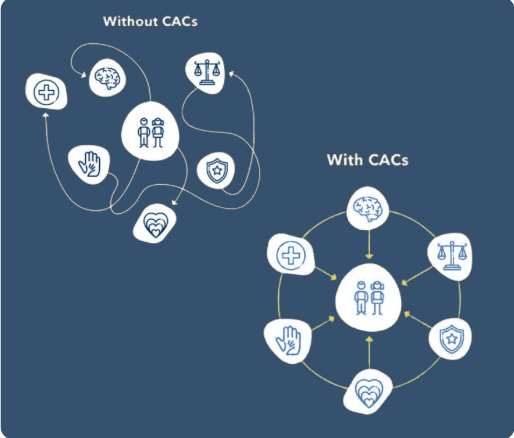
When police or child protective services believe a child is being abused, the child may be brought to a Child Advocacy Center (CAC) - a safe, child-focused environment - by a caregiver or other “safe” adult. A Child Advocacy Center is a place where a child can tell their story once to a trained interviewer who knows the right questions to ask in a way that does not not re-traumatize the child. Idaho CACs currently use the NICHD model of forensic interviewing. Then, a team that may include medical professionals, law enforcement, mental health, prosecution, child protective services, victim advocacy, and other professionals make decisions together about how to help the child based on the interview. CACs may offer therapy and medical exams, plus courtroom preparation, victim advocacy, case management, and other services.
The Idaho Network of Children's Advocacy Centers assists CAC's and developing centers in meeting Idaho Statute, national standards,. and best practices.
Idaho Statute 16-1602(11) defines a Child Advocacy Center, or CAC, as "an organization that adheres to national best practice standards established by the national membership and accrediting body for children’s advocacy centers and that promotes a comprehensive and coordinated multidisciplinary team response to allegations of child abuse by maintaining a child-friendly facility at which appropriate services are provided. These services may include forensic interviews, forensic medical examinations, mental health services and other related victim services."
The Core of the CAC Model: One Child, One Team, One Place
At the heart of the CAC model is the Multidisciplinary Team (MDT) approach. This team typically includes:
Law enforcement
Child protective services
Prosecutors
Forensic interviewers
Medical professionals
Mental health providers
Victim advocates
These partners work together to ensure that investigations are thorough, supportive, and trauma-informed, and that children and families receive the right services at the right time.

How CACs Help Kids and Families
CACs offer a spectrum of services that address both the investigative and healing needs of children who have experienced abuse:
Child-Focused Forensic Interviews
Trained interviewers guide children through a developmentally sensitive interview to gather information without retraumatizing them.
Medical Evaluations
When needed, CACs provide access to specialized medical exams that assess injuries, collect evidence, and support overall health.
Mental Health Support
CACs connect children and families with evidence-based therapy and counseling to help them process trauma and begin healing.
Victim Advocacy & Case Management
Advocates support families through the process, help them understand what to expect, and connect them to community resources.
Coordinated Decision-Making
The MDT meets regularly to review cases and collaboratively plan investigations, services, referrals, and follow-up care.
Why the CAC Model Matters
Child abuse, including sexual abuse, physical abuse, and neglect, is linked to long-term health, emotional, and social challenges if left unaddressed. CACs help minimize the trauma of both abuse and the response by providing a child-centered, coordinated system that improves outcomes for children and families.
In 2022, CACs across the country served more than 380,000 children and reached nearly 2.8 million people with abuse prevention education, demonstrating their broad impact.